The gist
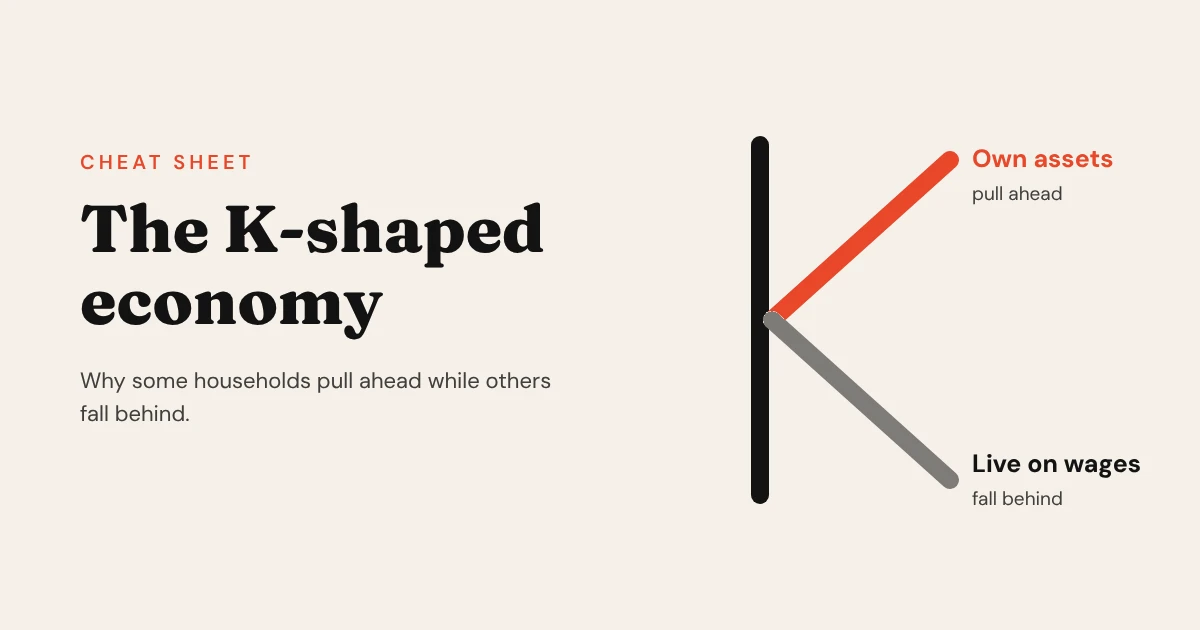
In a K-shaped economy, the people who own things (homes, shares, savings) pull ahead while people living on wages fall behind. The averages can look healthy while many households on the lower arm struggle. Moody's Analytics estimates the top 10% of U.S. earners raised their spending 62% from late 2020 to late 2025, and now do over 45% of all spending. Other data show a smaller gap, but the direction is the same: owning assets is what puts you on the top arm, if you can continue to afford them.
Three words first
- K-shaped: after a big economic shock, such as the 2020 pandemic, a recession or a sudden jump in prices, one group recovers and rises (the top arm of the K) while another stalls or falls (the lower arm).
- Assets: things you own that can grow in value or pay you, like a home, shares or savings.
- Inflation: prices rising over time, so the same money buys less.
How a K gets made
- Asset prices rise faster than wages. Owners get richer just by holding on. Renters and earners don't.
- Inflation hits unevenly. Food, energy and rent take up a bigger percentage of smaller budgets.
- High interest rates split savers from borrowers. Savers and owners on old fixed-rate mortgages tend to do better. People with card debt or new loans pay more.
- It feeds itself. Wealthier households keep spending, the headline numbers look fine, and nothing changes for the lower arm.
How bonds tie in
When lenders charge the government more, everyone pays more to borrow. On 9 October 2026, the U.S. government paid 5.24% to borrow for 10 years, up from 4.14% a year earlier. That rewards savers and owners locked into old, cheap loans, and squeezes renters and new borrowers on the lower arm. New to bonds? Read our Bonds cheat sheet.
Moves toward the top arm
The goal: own things that grow, owe less at high interest rates, and protect your purchasing power. General suggestions, not financial advice.
- Build a cash buffer of 3 to 6 months' costs, in an account that earns a real interest rate, not 0%.
- Clear high-interest debt first. A card at 22% costs more than almost any investment earns.
- Own assets, not just a paycheck. Consider learning more about Bitcoin: an asset designed to be deflationary, with the potential to drive costs down over time. Use the Reschooled Bitcoin Calculator to see how this works, and sign up for Season 1 or register your interest in the Bitcoin 101 course, coming soon.
- Fix borrowing costs carefully. When you refinance a mortgage, compare fixed rates, and avoid new variable-rate debt.
- Diversify your skill set. In-demand skills and being able to wear multiple hats are the best defense against the jobs gap.
- Learn new skills and keep up with technology and what it changes. Season 1 of Reschooled touches on this.
- Spread your bets. Diversify assets, so no single shock sinks you.
Why nobody told you this
School teaches how to earn a wage, not how to own things that grow. That's the difference between the two arms of the K. Reschooled's short video lessons explain how money, debt and investing really work, from the ground up, at reschooled.life.
Sources
- Federal Reserve Bank of Minneapolis, "Have U.S. consumers gone 'K-shaped'? A review of the data" (Jeff Horwich, 20 March 2026): Moody's, Dallas Fed, Bank of America Institute, New York Fed and Consumer Expenditure Survey figures as quoted above.
- U.S. Department of the Treasury, Daily Treasury Par Yield Curve Rates: 10-year 5.24% (9 October 2026), 4.14% (9 October 2025).
- Federal Reserve G.19 Consumer Credit: credit card rate 22.15% (2026 Q2, accounts assessed interest).
Educational content, not financial advice.